

Department of Physics


Profile
Department Profile - About the Department: The Department of Physics, Murkong Selek College, offers undergraduate education in Physics under the affiliation of Dibrugarh University. The department focuses on developing a strong foundation in theoretical and experimental Physics through student-centred teaching, laboratory-based learning, seminars, projects, internships, and community engagement. The undergraduate programme follows the Four-Year Undergraduate Programme (FYUGP) of Dibrugarh University in accordance with the National Education Policy (NEP) 2020. It covers fundamental and advanced areas of Physics while providing opportunities to develop analytical, mathematical, computational, experimental, communication, and research skills. The programme also provides multiple exit options, including Undergraduate Certificate, Undergraduate Diploma, Bachelors Degree, and four-year Bachelors Honours/Honours with Research, subject to the prescribed credit requirements. The department provides an academic environment that encourages scientific inquiry, critical thinking, problem-solving, interdisciplinary learning, and practical competence. Through its curriculum and academic activities, it prepares students for higher education, research, teaching, technical and scientific careers, and other professional opportunities. Courses Offered: The Department of Physics offers undergraduate education under the Four-Year Undergraduate Programme (FYUGP) in Physics as per the curriculum of Dibrugarh University. The programme provides multidisciplinary, skill-oriented, practical, and research-focused education in accordance with NEP 2020. B.Sc. (FYUGP) in Physics - Major (Core): A four-year undergraduate programme leading to UG Certificate, UG Diploma, UG Degree, and UG Honours/Honours with Research, depending on the completed year of study and prescribed credit requirements. Physics Minor Programme: Physics is offered as a Minor subject for students pursuing other Major disciplines. The Minor courses include Mechanics, Waves and Optics, Physics Laboratory, Electricity and Magnetism, Thermal Physics, Elements of Modern Physics, and Condensed Matter Physics etc. Generic Elective Courses (GEC): Evolution of Science, Introduction to Communication Technology, Materials Today, Digital and Space Technologies, The Universe, and Atmosphere of the Earth and Climate Change. Skill Enhancement Courses (SEC): Electrical Circuits and Network Skills, Electrical Wiring and Maintenance, Basic Instrumentation Skills, Computational Physics Skills, and Renewable Energy and Energy Harvesting. Research and Experiential Learning: The programme incorporates internship/community engagement, research methodology and ethics, research projects/dissertation, and Discipline Specific Elective (DSE) courses. Major Areas of Study: Mechanics and Properties of Matter; Waves and Optics; Mathematical Physics; Electricity and Magnetism; Thermal Physics; Elements of Modern Physics; Electromagnetic Theory; Quantum Mechanics; Statistical Mechanics; Condensed Matter Physics; Electronics; Classical Mechanics; Special Theory of Relativity; Experimental Physics and Laboratory Techniques; Computational Physics; Research Methodology and Ethics; Nuclear and Particle Physics; Plasma Physics; Physics of Devices and Instruments; Astronomy and Astrophysics; Nanomaterials and Applications. The major core curriculum progresses from fundamental concepts of mechanics, waves, mathematical physics, electricity and magnetism to modern Physics, quantum mechanics, statistical mechanics, condensed matter physics, electronics, classical mechanics, and advanced mathematical and quantum methods. Curriculum and Learning: The curriculum follows the L+T+P model (Lecture, Tutorial, and Practical), integrating classroom teaching, laboratory work, computational learning, seminars, internships, and project-based activities. It develops student theoretical, experimental, mathematical, and problem-solving skills while promoting critical thinking, scientific inquiry, teamwork, research aptitude, and interdisciplinary learning. Facilities: The Department of Physics provides an academic environment that supports theoretical learning, practical training, experimental work, and research-oriented activities. Physics Laboratory: Undergraduate laboratory facilities for conducting experiments related to Mechanics, Properties of Matter, Waves and Optics, Electricity and Magnetism, Thermal Physics, Modern Physics, Electronics, and other areas covered under the FYUGP curriculum. Experimental Learning: Practical classes provide students with hands-on experience in measurement, data collection, analysis, experimental techniques, and interpretation of physical phenomena. The FYUGP curriculum includes three major Physics laboratory courses and additional laboratory options through Discipline Specific Electives. ICT-Enabled Teaching: Classroom teaching may be supported through digital presentations, multimedia resources, e-learning materials, and other ICT-based educational resources, in accordance with the teaching-learning framework of FYUGP Physics. Computational Learning: The curriculum provides opportunities for developing computational skills through Computational Physics Skills and Computational Physics Laboratory courses, enabling students to apply computational techniques to physical problems and data analysis. Research and Project-Based Learning: Students are provided opportunities to engage in research methodology, internships, community engagement, research projects, dissertation work, and Discipline Specific Electives at the advanced stages of the programme. Skill Development: Skill-based courses provide exposure to electrical circuits, electrical wiring and maintenance, instrumentation, computational Physics, renewable energy, and energy harvesting. Academic Activities: The department promotes seminars, group discussions, laboratory activities, project-based learning, internships, community engagement, research-oriented activities, and participation in academic and scientific programmes.
Faculty Members
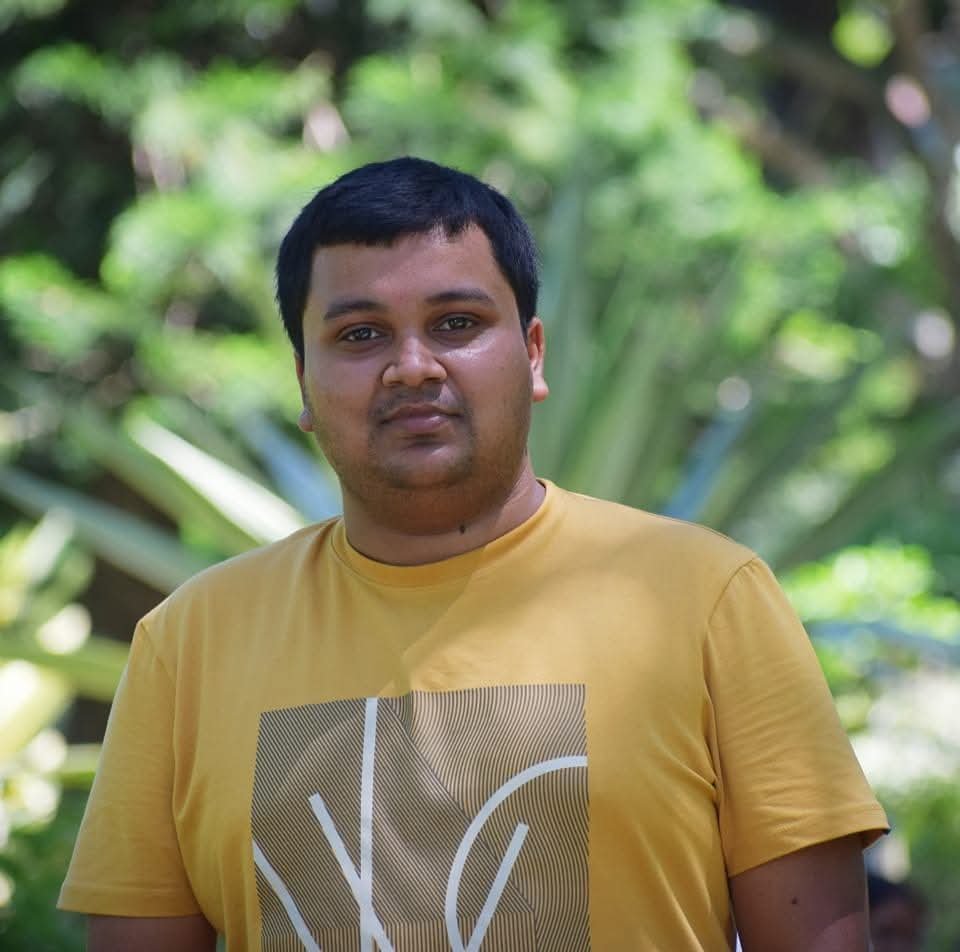
Dr. Arup Kar
Department: Physics
Designation: Assistant Professor, HOD
Qualification: M.Sc. in Physics, M.Phil. in Physics, Ph.D. in Physics, SET 2016
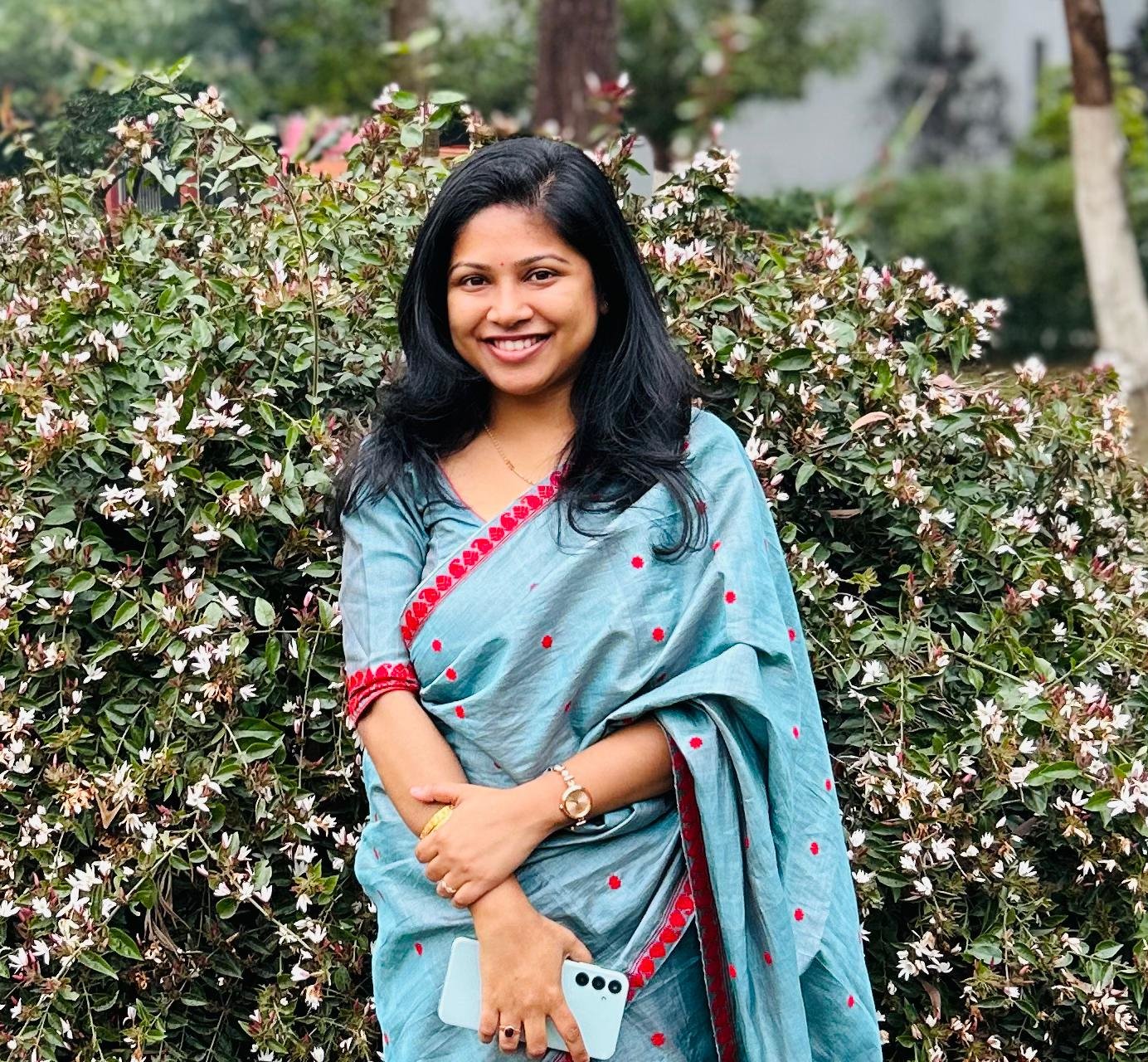
Dr. Rituparna Hazarika
Department: Physics
Designation: Assistant Professor
Qualification: MSc, PhD
Dr. Jnanraj Borah
Department: Physics
Designation: Assistant Professor
Qualification: M.Sc. in Physics, Ph.D., CSIR-UGC NET-JRF, DST-INSPIRE Scholar
Activities
| Activities | Description | Date | View |
|---|---|---|---|
| Community Work 2025 | Community Work 2025 | 2025-06-21 | No File |
| Student Seminar | Departmental student seminar | 2025-05-18 | No File |
Achievements
| Achievement | Date | View |
|---|---|---|
| Research paper publication by faculty member | 2026-02-28 | No File |
| Student achievement in science exhibition | 2025-08-12 | No File |
Question
| Semester | Year | Paper Code/Title | View |
|---|---|---|---|
| FYUGP 1st Semester | 2025 | Physics Major Question Paper | No File |
Syllabus
| Title | Date | View |
|---|---|---|
| FYUGP 3rd SEM Minor Syllabus 2025 | 2025-06-23 | No File |
| FYUGP 3rd SEM Major Syllabus 2025 | 2025-06-23 | No File |
| FYUGP Physics 1st Sem Minor Syllabus 2025 | 2025-06-21 | No File |
Notable Alumni
| Name | Batch | Current Position | Image |
|---|---|---|---|
 | |||
 |
Internal Assessment
| Semester | Year | Paper Code/Title | View |
|---|---|---|---|
| FYUGP 1st Semester | Internal Assessment Notice | No File |
Department Visitors
| Name | Date | Image |
|---|---|---|
 | ||
 |
Ex Faculty Members
| Name | From | To | Image |
|---|---|---|---|
 | |||
 |